
PATHWAY 06 · PAYROLL AND COSTS
How to control domiciliary care payroll and costs
A practical guide to care-worker travel time, mileage, visit costs, approved hours, payroll checks, pricing and margins for UK domiciliary care agencies.
Applies to: UK payroll and cost guidance. Minimum-wage treatment depends on the worker, pay period and facts; take professional advice where needed.
- Practical guide
- 11 min read
- Reviewed 22 July 2026
- 7 official sources checked
What this guide covers
- Define pay and cost rules
- Capture scheduled and actual activity
- Identify and resolve exceptions
- Convert activity into payable units
Quick answer
Separate planned, worked, payable, billable and costed time—then reconcile every difference.
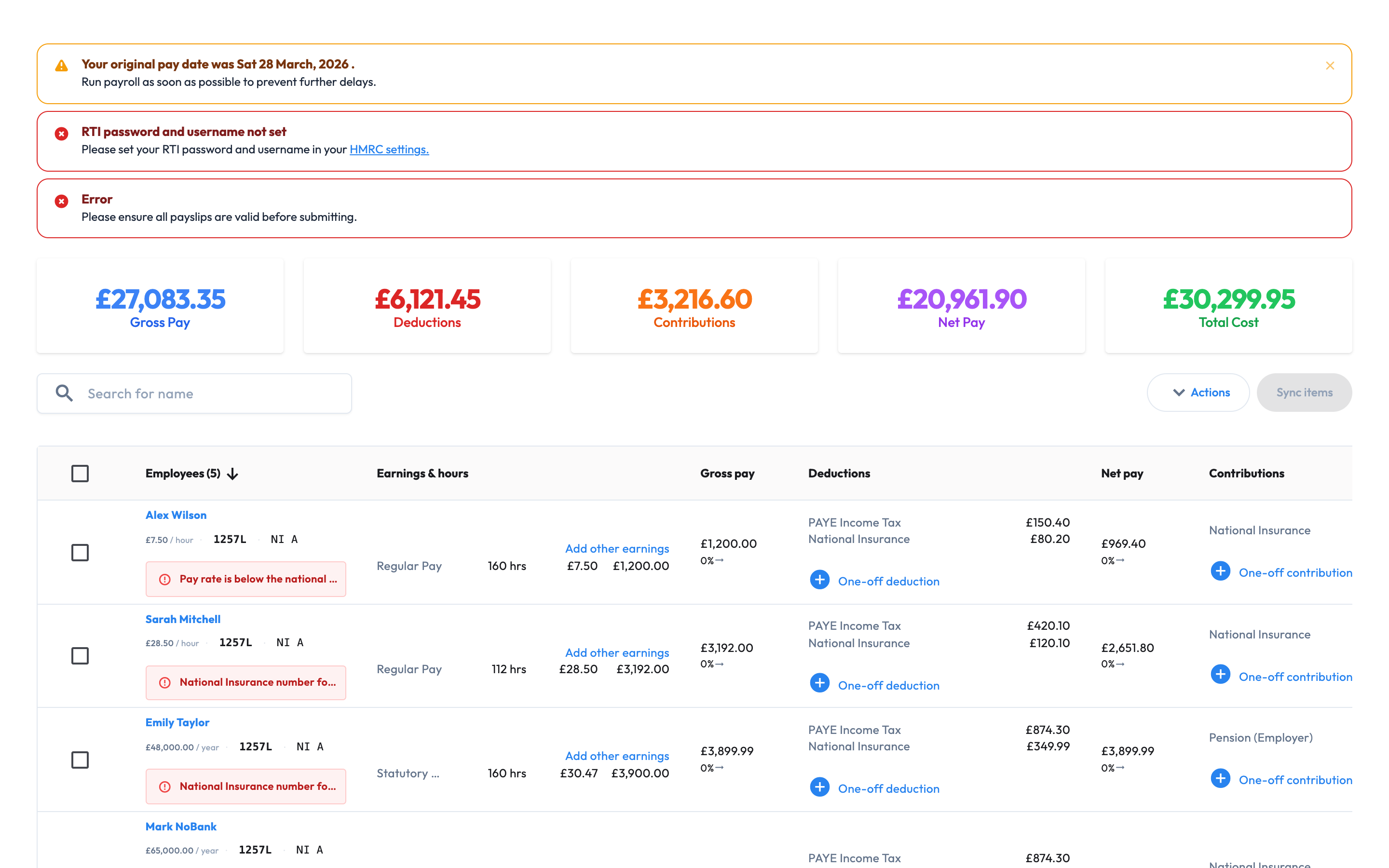
Domiciliary care payroll cannot be controlled from contact time alone. Providers need to understand paid care, required travel between assignments, mileage, waiting, training, sleep-ins, holiday pay and other working time, then test total pay against the rules that apply across the relevant pay reference period.
By the end of this pathway, you will be able to convert completed visits, travel and exceptions into approved payroll inputs, verify minimum-wage compliance, reconcile each payslip and identify whether care packages recover their full delivery cost.
One visit, five different quantities
Do not assume the five layers are equal
One visit can be scheduled for 45 minutes, delivered in 52, require 67 payable minutes after travel, permit only 45 billable minutes and cost more than the revenue earned.
| Layer | Meaning | Example |
|---|---|---|
| Scheduled | What the provider planned. | 45-minute personal-care visit. |
| Worked | What actually happened. | Worker attended for 52 minutes. |
| Payable | What the worker is entitled to be paid for. | Visit, relevant travel and contractual additions. |
| Billable | What can be charged under the client or commissioner contract. | Contract permits only 45 minutes. |
| Costed | The full economic cost of delivery. | Pay, on-costs, mileage, travel and overhead allocation. |
Never overwrite the evidence
Preserve the complete visit-to-payroll audit history
- 01Original scheduled record
- 02Actual worker record
- 03Exception raised
- 04Evidence supporting correction
- 05Manager approval
- 06Payroll conversion result
- 07Payroll calculation
- 08Post-payroll adjustment where required
Time, reimbursement and client charging are separate
Classify travel, waiting and breaks from the facts
Travel time, mileage reimbursement and client charging answer different questions. Waiting is not automatically a break: consider freedom, location, cause, instructions, work performed and the employment contract.
- Home to first client
- Generally commuting for minimum-wage purposes; check contract and working-time position separately.
- Travel between clients
- Working time for minimum-wage purposes and a separate question from mileage reimbursement.
- Client to office or required training
- Business travel may count where required in connection with work.
- Waiting between assignments
- Assess whether the worker was required to be available or free to use the time.
- Genuine uninterrupted break
- Record separately; it generally does not count as minimum-wage working time for time work.
- Last client to home
- Generally treated as commuting for minimum-wage pay, subject to the facts and other working-time rules.
- Emergency detour or accompaniment
- Record actual time, purpose and instructions as work-related activity.
- Mileage reimbursement
- Vehicle-use repayment or allowance—not a substitute for deciding whether travel time is payable.
For minimum-wage purposes, required travel from one assignment to another counts; ordinary home-to-work travel is generally excluded.
Do not use one overnight code
Classify the actual overnight arrangement
Record the shift type, planned sleep period, interruptions, time awake for work, tasks, applicable rate or allowance and manager review of unusual activity.
| Arrangement | Basic distinction |
|---|---|
| Waking night | The worker is expected to remain awake and work. |
| Sleep-in | The worker is expected to sleep but may be required to respond; analyse facilities, interruptions, contract and minimum-wage rules. |
| On-call away from the workplace | The worker is available to respond but is not necessarily working throughout. |
| Overnight live-in care | Analyse the real arrangement, duties, freedom and work performed rather than applying a generic overnight code. |
Keep decisions distinct even in a small agency
Separate operational, payroll, compliance and commercial approval
Was the visit record accurate?
Care coordinator or operational manager
Was the exception reasonably resolved?
Authorised operational manager
Which pay rule applies?
Payroll or HR
Is the input complete for payroll?
Payroll approver
Is minimum wage satisfied?
Payroll compliance owner
Is the package commercially viable?
Finance or provider leadership
Protect the payroll cut-off
Classify exceptions before locking payroll inputs
Must resolve before payroll
- Missing attendance
- Unexplained overlap
- Missing travel
- Unauthorised overtime
- Missing sleep-in interruption record
- Rate not assigned
- Minimum-wage failure
- Duplicate shift
- Unexplained manual adjustment
Controlled adjustment process
- Late mileage claim
- Retrospective commissioner correction
- Evidence received after cut-off
- Approved back pay
- Corrected rate or allowance
Every open exception records:
Owner · Value at risk · Affected worker · Due date · Decision · Supporting evidence · Current or next-payroll treatment
Check every pay reference period
Test the worker’s effective result, not the headline rate
The denominator may include more than client-contact time, while not every payment counts towards minimum-wage pay in the same way. Apply the correct rules for the work type and facts.
Eligible minimum-wage pay ÷ hours counted for minimum-wage purposes
- Each worker separately
- Each relevant pay reference period
- Correct age or apprentice rate
- Relevant deductions and adjustments
- Applicable travel, waiting and training time
- Correct treatment of premiums and allowances
- Sleep-related work based on the actual arrangement
- Calculation and supporting inputs retained
Check travel time and minimum wage
Use synthetic planning inputs to estimate how assignment travel, mileage and deductions affect effective hourly pay. Confirm the actual worker, work type and pay reference period before relying on the result.
Contact wage is not delivery cost
Calculate the fully loaded cost and explain every variance
Contribution is revenue less direct and attributable delivery cost. Margin is not the client rate minus the contact-time wage.
- Contact pay
- Travel and waiting pay
- Mileage and expenses
- Employer National Insurance
- Employer pension
- Holiday cost
- Training and supervision
- Sickness allowance
- Coordination and management
- Software and other overhead
Price packages using the work and infrastructure required to deliver them—not only the minutes spent inside the client’s home.
| Variance | Why it matters |
|---|---|
| Planned hours vs worked hours | Overruns, missed visits and planning quality. |
| Worked hours vs payable hours | Travel, waiting and contractual rules. |
| Payable hours vs billable hours | Unfunded delivery time. |
| Planned cost vs actual cost | Operational variance. |
| Revenue vs fully loaded cost | Package viability. |
| Overtime by team | Staffing pressure. |
| Travel cost by area | Geographic efficiency. |
| Manual adjustments and corrections | Weak upstream records or controls. |
Model the full cost of a care hour
Estimate wages, travel, mileage, employer on-costs, overhead and target margin before setting or reviewing a client charge rate.
Who this guide is for
Use this pathway when finance, operations and payroll need one explainable version of delivered and payable care.
- Care-agency owners, finance leads and operations directors
- Payroll teams and outsourced payroll contacts
- Registered managers and coordinators approving worked time
- Providers reviewing charge rates, travel policy or rota efficiency
Decision process
From completed visit to correct payslip
Do not ask payroll to resolve care-delivery questions. Complete the operational review first.
- 01
Define pay and cost rules
Document rates, allowances, effective dates, travel, waiting, overnight, holiday and approval rules before work occurs.
- 02
Capture scheduled and actual activity
Keep planned care distinct from clocking, tasks, travel, mileage and other raw evidence.
- 03
Identify and resolve exceptions
Investigate missing, late, overlapping, changed and manually adjusted records.
- 04
Convert activity into payable units
Apply documented rules without silently changing the underlying operational record.
- 05
Approve payroll inputs
An authorised owner confirms evidence, interpretation and totals before cut-off.
- 06
Calculate payroll and check compliance
Apply payroll rules and test minimum wage by worker and pay reference period.
- 07
Reconcile payroll to approved inputs
Explain every difference between approved work, gross pay and payment output.
- 08
Compare cost with revenue
Measure fully loaded delivery cost, billable value, contribution and variance.
- 09
Correct the operational cause
Feed recurring travel, scheduling, approval or pricing problems back to their owner.
Practical checklist
Care visit-to-pay completion checklist
These controls keep operational evidence, payroll interpretation and commercial analysis distinct.
- Pay rules, effective dates, rates and allowances have authorised sources.
- Scheduled, actual, payable, billable and costed time remain distinguishable.
- Travel between assignments is captured.
- Waiting and breaks are classified from the actual circumstances.
- Mileage claims include date, journey, purpose and distance.
- Sleep-in interruptions and overnight arrangements are recorded separately.
- Visit exceptions are resolved by an authorised person.
- Manual changes retain original values, reasons, evidence and approval history.
- Payroll inputs are locked after approval.
- Minimum wage is checked by worker and pay reference period.
- Holiday, overtime, premium and allowance rules are applied consistently.
- Approved inputs reconcile to payroll results.
- Late corrections follow a controlled adjustment process.
- Actual package cost is compared with billable revenue.
Records behind the payroll result
- Published rotas and actual visit or shift records
- Travel time, mileage, waiting and expense evidence
- Pay rates, premiums, contractual terms and policy versions
- Manager approvals, manual changes and exception reasons
- Minimum-wage calculations and pay-reference-period checks
- Payroll input totals, calculation reports, payslips and RTI records
- Variance reports, reconciliations, corrections and employee queries
Where care payroll and margin control break
The rota is paid without review
Planned duration becomes payable time even when visits changed, were missed or required additional work.
Travel is estimated from perfect routes
The model ignores actual assignment travel, waiting, traffic and the way work happened.
A high hourly rate creates false comfort
The provider does not test total pay and working time across the relevant pay reference period.
Payroll fixes operational gaps
Payroll staff chase messages and reconstruct visits because managers did not resolve exceptions before cut-off.
Pricing ignores non-contact cost
The charge rate covers the call but not travel, mileage, on-costs, cancellations, supervision and office overhead.
Check the source
Official payroll and employment sources
Use current rates and rules for the relevant pay period. Do not rely on an undated calculator or summary.
- HMRC National Minimum Wage Manual: travelling timeRequired travel between assignments can count as working time; ordinary home-to-work travel is generally excluded.
- GOV.UK: National Minimum Wage ratesCurrent and previous statutory hourly rates.
- GOV.UK: calculating the minimum wageEmployer guidance on pay, working hours and minimum-wage calculations.
- GOV.UK: holiday entitlement and payCurrent rules and guidance for statutory holiday entitlement and pay.
- GOV.UK: minimum wage for different types of workWorking-time examples for care travel, waiting, breaks and home journeys.
- GOV.UK: working hours for minimum-wage purposesDetailed current guidance on work types, travel, availability, training and sleep-ins.
- GOV.UK: night work and sleep-related shiftsHours, limits and distinctions for night work.
Continue learning
Supporting guides planned for this pathway
Future guides will separate the legal, operational and commercial questions that are often mixed together.
- Understanding domiciliary care pay inputs
- Travel time, waiting time and mileage
- Sleep-ins, waking nights and on-call work
- Approving care-worker hours before payroll
- Minimum-wage checks in domiciliary care
- Holiday pay for variable-hours care workers
- Reconciling approved hours to payroll
- Correcting care-payroll errors
- Calculating the fully loaded cost of a visit
- Pricing care packages and monitoring margin
- Using payroll variances to improve scheduling
A RESTRAINED WORKMAX CONNECTION
Move from completed visits to payroll without rebuilding the week
Workmax connects scheduled care, visit evidence, travel, mileage, approved time and UK payroll. Managers still decide what work is valid and employers remain responsible for pay and employment compliance.
Continue through the hub